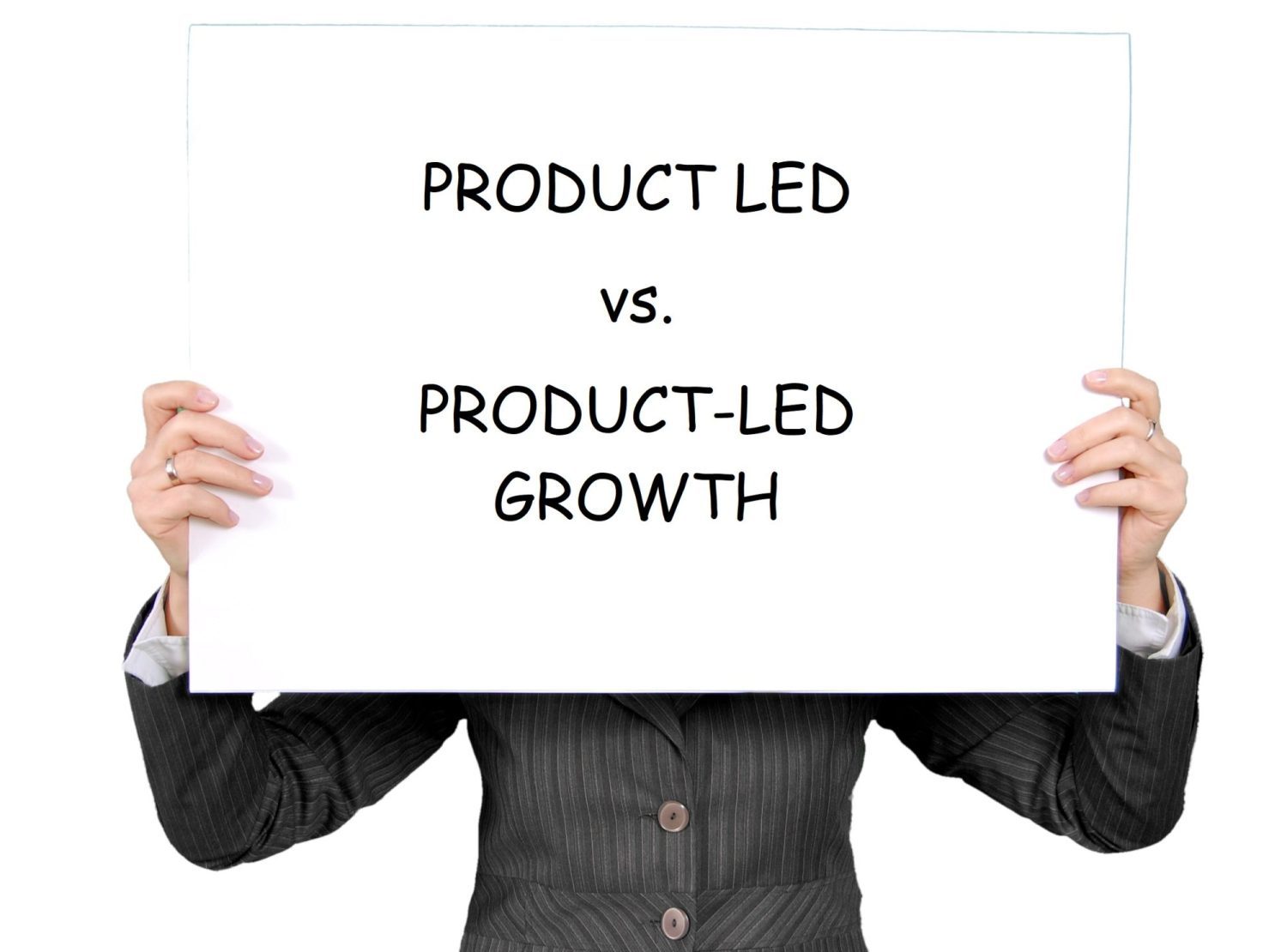
Is there a difference between “Product Led” and “Product-Led Growth” (PLG)? You’ve probably seen the term “Product-Led Growth” popping up more and more in your feeds and emails if you’re a product leader. If you’re like us, you may have initially assumed they referred to the same topic when you saw the term. We thought the notion of “Product-Led Growth” was simply an extension of our own mindsets and approach to product management where a customer-centric product team drives the direction of the product to grow the business relying on deep customer insights and data. This was also in contrast to the approach at many companies where sales informs development based on requests from customers, which was common in the early days of B2B SaaS.
When you dig into “Product-Led Growth” (PLG), it’s not the same thing as “Product Led.” If you understand PLG already, you might say you need to be Product Led to drive PLG, and we won’t disagree. PLG has been gaining traction over the last 5 years, with interest growing 15x if we use Google searches as proxy. If you’re not familiar with PLG, we’ll dig into what PLG means, the benefits and who can benefit, who’s applying it well, and considerations if PLG it fits your company. If you are familiar with PLG already, you may find some additional clarity and considerations for applying it.
Product-Led Growth
PLG is a growth model that relies on users engaging with the product to try, buy and onboard in a self-serve manner vs. the more traditional sales-led growth model where sales does the heavy lifting to acquire the customer and a service team drives the onboarding. PLG seeks to build value early on in a user’s experience (i.e., the product starts solving the problem(s) for which it was hired), and prior to payment.
We all want a product that drives growth – as in the case of the Net Promoter model where happy users will “promote” your product. With PLG, you want promotion of course, but the product itself is the growth engine in a more literal sense. It’s the actual vehicle to sell and guide users through trial, conversion, onboarding, and expansion.
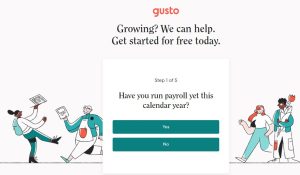 For example, if you’re a small business searching for payroll, you will likely come across Gusto and ADP in a Google search. Gusto (small business payroll) does a fantastic job embracing the concept of PLG. Their experience is so simple, they start onboarding you from the moment you land on the home page. You can start realizing the value of the solution within minutes without interacting with anyone at Gusto. Companies hire Gusto to accurately, timely, and legally pay their employees. Within the first usage, Gusto guides you to collect the information you need to meet these goals. Help from staff is there if you need it, of course, but the experience is designed such that you likely won’t need it. They have one of the best self-guided experiences I’ve seen.
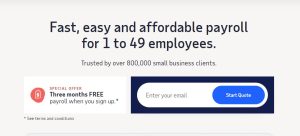
Conversely, if you go to ADP for payroll, you’ll be asked to enter your email address to get a quote so a salesperson can contact you. You have to go through the salesperson to use their service. This is Sales Led Growth (SLG) as the sales team does the heavy lift to bring in customers.
There are many companies that have been successful with PLG. HubSpot, Slack, Zoom. LinkedIn (Premium), Dropbox, and Canva are all great examples; and PLG can serve well in both B2B and B2C businesses.
PLG Sounds Like a Freemium Model
True, PLG and freemium are related concepts, but there are differences between them. PLG is a complete go-to-market strategy for a company where freemium is a pricing strategy. PLG focuses on the product as the primary lever for customer acquisition, retention, and growth, and it requires the company to deliver a great product experience to support these goals.
The freemium model is a pricing strategy where the company relies on a free version with limited capabilities to draw users in, then uses in-product upsells or paid upgrades to drive revenue. These companies only expect to convert a portion of their free users.
For example, TurboTax has a Freemium model, as you are required to upgrade to use it if you fall into certain tax categories and you need to pay before you file. When you file is when you realize the value of the product. Their goal is to convert a portion of the free customers to paid for a one-time purchase.
PLG doesn’t focus on immediate monetization, rather in building value for the customer prior to the purchase.
HubSpot has a PLG model where they aim to attract a broad base and offers its CRM for free. They deliver value with their CRM and focus on building a long-term relationship that may lead to purchases of other modules. They encourage the users to share the CRM solution with their co-workers in order to build immediate value to that company.
There’s some debate about these concepts being mutually exclusive, but we believe you can have a freemium pricing strategy as part of your PLG model. Think Dropbox. They start with a free version where you pay to unlock additional storage space or certain features (freemium), but the base product is focused on delivering immediate value with great product experience that drives growth and expansion within a family or friends circle (B2C) or an organization (B2B).
Why Product Led Growth Is Appealing
What’s driving the growth in interest around PLG? Certainly companies like Pendo and Amplitude that provide tools and instrumentation to measure product engagement have embraced the concept and are promoting it heavily (you’ll see what we mean if you Google “Product-led Growth”).
On the surface, logic suggests that PLG companies will have a lower cost structure because the reliance on Sales and Customer Service are lower. According to Bain1, though, that’s not necessarily the case. Many PLG companies do have higher profits, but their spend in product development is also higher.
There are significant benefits that are driving the interest:
- First and foremost, a PLG strategy can drive attractive growth in revenue, market share and profit. In a comparison of 176 public software companies, revenue growth of PLG companies was nearly 2x that of non-PLG companies.2
- Investors reward PLG companies with higher valuations vs. non-PLG companies with similar revenue growth rates.2 This supports our own experiences: if you’re a start-up looking for funding, savvy investors are looking for companies with lower acquisition costs and fast time to value, and PLG supports that.
- PLG can provide the ability to scale faster and more effectively. Because the model doesn’t rely on a growing sales force to develop and close leads, it’s not constrained by the size and capabilities of the sales force. In addition, the users become the sales force and drive the expansion and influence the company-level purchase decisions within their organizations.
Is PLG Right for Your Company?
 There are 3 dimensions that we believe are the most important to understand to determine fit (see diagram). If these dimensions line up well, your product may be a good fit for PLG.
On the other hand, there may be situations where PLG may not fit because your product sits on legacy technology that won’t easily support a frictionless onboarding experience. Or perhaps high touch from a sales and onboarding perspective is a key part of your brand promise.
It’s Not All or Nothing
The Venn diagram here is just illustrative, and you don’t need to fall in the center in order to benefit from PLG. There’s a spectrum, and many companies rely on a hybrid PLG model. They rely on the product to onboard the users and provide a great experience to build value, but they use sales to help deepen the relationship and purchase additional products. For example, you may have enterprise customers that require a sales person to facilitate the sale through the purchasing department or through senior executives after front line employees adopt the solution (think Slack). Perhaps there are also enterprise-specific needs that require negotiation as well.
Achieving Success with PLG
If you choose to shift to PLG, carefully consider how the transition should take place. From what we’ve seen at Product Rebels, there are 3 critical success factors to achieve success with a PLG approach:
- A deep understanding of the decision processes for your customers. Not only is this critical to deciding if PLG is right for your business, it’s required to create the experience that will get your customers through it. Your PM and UX teams will need to expand their focus upstream into the trial and buying process, if they aren’t already. Their research and outcomes need to solve for the complete user journey.
- Leadership alignment around PLG as a go-to-market strategy. This is not just a product strategy, it’s an end-to-end operational strategy that impacts the full leadership team from the CEO to Sales and Service. They too need to understand and embrace the implications. It can be a major shift in organizational mindset, roles, and capabilities. Some change management required.
- Complete support of continuous customer learning. Not only will the org need to evolve, but the leaders will need to support a culture of continuous learning required to deliver on PLG. The benefits of PLG aren’t reaped overnight, and the company will need to run experiments and be open to learning in order to execute PLG well. That means you’ll need the right people in product and UX to guide the learning as well as the right tools and processes to measure conversion, time to value, retention, and the overall experience (such as NPS). These metrics will become your guide to understand your baseline and optimize for PLG. NOTE: We will go deeper on accelerating time to value (TTV,) a critical metric in the PLG approach, in part 2 of this article.
Getting Started with PLG
If you are considering making the transition to PLG, here are some steps you can take to get started.
- Evaluate the existing customer experience from trial to purchase to onboarding to understand where the friction points are.
- Build an understanding of time to value. How long and how many steps does it take for a customer to reap the first point of value of your solution? (Again, we’ll go deeper on this in Part 2 of this article.)
- Look at competitors or products in similar industries that are succeeding applying PLG. How does your experience compare?
Always feel free to reach out to us at Product Rebels as we can help you get started.
PLG is a wide broad organizational strategy that can be implemented across a spectrum depending on the specifics of your customer’s decision making process, the complexities of your industry, and your company’s capabilities. It can provide a significant opportunity for software companies to drive scalable growth. And, yes, you will need to be “Product Led” to drive PLG, but hopefully this provides a bit of clarity on the difference between the two.
Sources: 1. Bain & Company brief 1/24/23 2. Bain PLG survey Sept-Oct 2022, OpenView PLG index, S&P Capital IQ
Author: Steve Cook
Date Published: August 4, 2023
If you’re interested in discussing PLG further, feel free to contact the author at steve@productrebels.com.
Product Rebels is a product management training and coaching firm run by long-term product executives for companies like Intuit and Mitchell International. We have coached over 200 companies, small and enterprise level, in the skills and frameworks that help product management leaders and product managers deliver kick-ass customer experiences. We have a passion for finding efficient ways of infusing customer insight into everything product teams do in pursuit of experiences that customers love …and that drive growth. Contact us if you’d like an assessment of your PM teams strengths and areas of opportunities or if you want to bolster product management best practices that are proven to drive growth. Join us in the Product Rebels Community on Facebook or the Product Rebels Community on LinkedIn.