
AI didn’t break PM. It made great product teams unstoppable and weak ones obvious.
AI is one of the most important accelerants product teams have ever had. Used well, it dramatically improves AI product management: faster synthesis, quicker prototyping, more options explored, and less time spent grinding out low-value documentation. We see this weekly in our work with product leaders and product teams inside enterprise organizations.
But here’s the truth many teams are still uncomfortable naming: AI doesn’t fix product management problems. It exposes them. That’s not an argument against AI. It’s a call for stronger product leadership, better product management discipline, and deeper user experience foundations in an AI-enabled world. We’re not witnessing an AI failure. We’re witnessing a product management maturity gap.
Enterprise investment in AI is accelerating. Organizations are deploying more generative AI tools, models, and supporting infrastructure across product, design, and engineering.
Yet many companies still struggle to turn that investment into sustained business impact. McKinsey reports that while many organizations are experimenting with gen AI, only a smaller set are scaling it in ways that materially improve performance across functions. The gap isn’t access to technology – it’s organizational readiness to use it well.
This matches what we see: AI adoption doesn’t fail because the models are incapable. It fails because teams try to automate thinking they never fully did in the first place.
What AI actually accelerates in product management
AI is exceptionally good at accelerating core product management activities:
- Generating multiple solution options quickly
- Synthesizing large volumes of qualitative and quantitative input
- Supporting faster discovery and iteration cycles
- Enabling rapid prototyping and experimentation
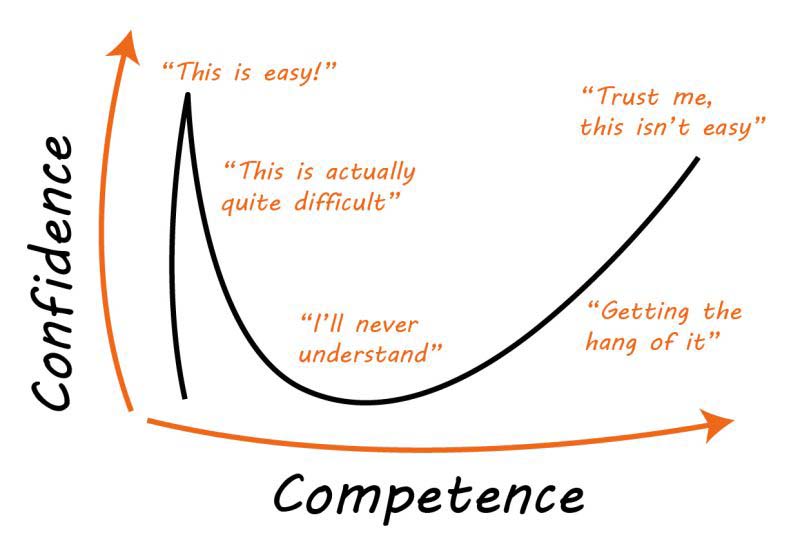
In short, AI makes speed cheap across the product development lifecycle. And that is exactly why product leadership and judgment matter more than ever. MIT Sloan Management Review highlights a pattern many leaders are experiencing: gen AI can boost productivity, but quality gains depend heavily on the user’s expertise. Less experienced practitioners can become more confident in outputs that are less accurate – a dangerous dynamic for product decisions. Can any one say Dunning-Kruger?
AI doesn’t know whether a problem is worth solving. It doesn’t know whether insight is representative. It doesn’t know whether a roadmap aligns with strategy. Those responsibilities still belong to product managers, designers, and product leaders.
When AI appears to ‘break’ product management, it usually looks like this:
- AI-generated personas created without real customer research
- Insights synthesized from second-hand data with no user context
- Roadmaps justified by fluent AI narratives instead of evidence
- User experience decisions optimized for speed, not learning
These are not failures of AI. They are failures of product fundamentals being skipped or outsourced. Andrew Ng has argued that as AI reduces the cost of building and prototyping, the true bottleneck becomes deciding what to build and why. Teams without strong product thinking simply get to the wrong answer faster.
AI doesn’t replace product managers. It raises the bar for them.
High-performing product teams don’t treat AI as an authority. They treat it as a collaborator. Harvard Business Review has described how teams get better outcomes when AI is used to challenge assumptions, surface alternatives, and support decision-making – not when its outputs are accepted at face value.
The implication for product leadership is straightforward but demanding: if your team cannot explain why an AI-generated answer is right or wrong, the issue is not the model. It’s the process.
What strong product teams do differently with AI
The product organizations seeing real impact from AI tend to share the same behaviors:
- They ground AI usage in real customer research and user experience insight
- They use AI to expand exploration before converging on solutions
- They apply human judgment to validate, prioritize, and decide
- They integrate AI into product workflows with clear accountability
IBM points to common barriers that block value: data quality issues, poor workflow integration, and weak governance. These are not ‘IT problems’ – they are core product leadership and operating model problems.
In other words: AI amplifies the product system you already have.
What you can do tomorrow
- Treat context as a first-class input to AI; not something you gloss over
AI is only as useful as the context it’s given. When teams provide thin or implicit context, AI doesn’t fix the gap, it accelerates it. Strong teams make context intentional by doing a few simple things:
-
- They define what context matters for different decisions. Customer context for discovery, business strategy and constraints for prioritization, and technical realities for delivery. They don’t dump everything (or nothing) in and hope the model sorts it out.
- They choose tools that support context accumulation. Not all GenAI tools handle shared memory, reuse, or sustained context well. Strong teams don’t treat tools as interchangeable when context matters.
- They structure context for use, not just ingestion. Raw artifacts are converted into clear inputs like problem statements, assumptions, constraints so the AI can interpret them meaningfully.
- They pressure-test understanding before relying on output. Teams ask the AI clarifying questions to confirm it actually understands the context before using results to drive decisions.
Rule of thumb:
If you’re surprised by the output, the issue usually isn’t the model. It’s the context you assumed instead of making explicit.
- Be explicit when context is thin and manage assumptions on purpose
Early in product work, customer insights and broader context can be super thin. The problem isn’t using AI early – it’s pretending early outputs are more certain than they are. Strong teams normalize this by doing a few simple things:
-
- They label early AI outputs as directional or assumption-heavy. This makes uncertainty visible instead of buried under fluent language.
- They surface the biggest leaps of faith explicitly. What’s inferred? What’s guessed? What’s based on limited data?
- They decide which assumptions they’re willing to live with temporarily. And which ones must be validated before committing time or money.
- They memorialize a validation plan. Lightweight tests, customer conversations, or usage checks are planned before major decisions are locked in.
Rule of thumb:
The earlier AI is used, the more explicit the assumptions – and the clearer the plan to validate them.
- Keep humans firmly in the loop and build critical thinking, not compliance
AI is persuasive by default. That’s why human judgment can’t be optional. Teams that struggle with AI often accept outputs at face value, especially when they sound polished or align with what people already believe. Strong teams do the opposite. In practice, before using AI output for decisions or stakeholder-facing communications, this looks like:
-
- Asking “why might this be wrong?” as a standard review question. Not as skepticism, but as discipline.
- Pressure-testing outputs against real constraints. Customer behavior, business strategy, technical realities.
- Treating AI as an input to thinking, not a substitute for it. Decisions are still owned by humans, explicitly.
AI is persuasive by default. That’s why human judgment can’t be optional.
Rule of thumb:
If an AI output can’t be challenged, explained, or defended by a human, it’s not ready to influence a decision.
The Takeaway
AI didn’t break product management. It removed the excuses. Clear problems still matter. Real customers are still non-negotiable. Thoughtful tradeoffs still separate great product teams from busy ones. AI simply makes the consequences of ignoring those fundamentals arrive faster.
Want help putting this into practice?
At Product Rebels, we work with product leaders and teams navigating exactly this shift: using AI to accelerate delivery without losing product discipline or customer trust.
Is your team experiencing challenges in implementing AI into your product operating model or struggling in establishing the practices that enable the best outcomes from AI product building?
Schedule 30 minutes with us to learn a little bit about you and explore how we can help.
About Product Rebels
Product Rebels helps product leaders bring their teams from good to great. We work with established product organizations that already know the basics of product management but want to operate at a higher level. Our focus is not Product Management 101. It’s helping teams build strong customer foundations and outcome-oriented ways of working that consistently translate into better results; for customers and for the business.
We partner with leaders and teams to change how product work actually happens day to day: how customer insight is gathered and shared, how problems are framed, how tradeoffs are made, and how learning compounds over time. AI is infused throughout these practices as an accelerator, helping teams synthesize learning faster, explore more options, and move with greater confidence without sacrificing judgment or customer connection.
The result is product teams that don’t just ship more, they build the right things, make better decisions under pressure, and deliver meaningful, sustained impact.
Sources & further reading
- McKinsey & Company – The State of AI in 2023
https://www.mckinsey.com/capabilities/quantumblack/our-insights/the-state-of-ai-in-2023 - MIT Sloan Management Review – The Productivity J-Curve: How Intangibles Complement Gen AI
https://sloanreview.mit.edu/article/the-productivity-j-curve-how-intangibles-complement-gen-ai/ - Harvard Business Review – How to Use AI to Augment Human Decision-Making
https://hbr.org/2023/07/how-to-use-ai-to-augment-human-decision-making - Harvard Business Review – The False Promise of AI in Decision Making
https://hbr.org/2024/02/the-false-promise-of-ai-in-decision-making - Andrew Ng – AI Is the New Electricity
https://www.deeplearning.ai/the-batch/ai-is-the-new-electricity/ - IBM – Global AI Adoption Index https://www.ibm.com/reports/ai-adoption